Trading with a 9
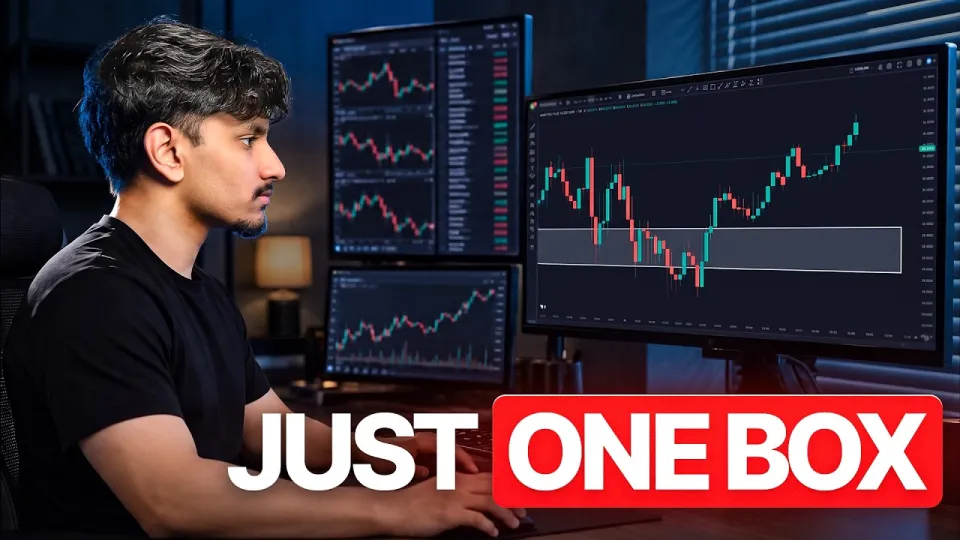
Video: Once You Master This Strategy, Trading Becomes Incredibly Simple
Want articles like this for your own video to promote it on YouTube and Google? Order them through the Telegram bot @sat_sit_bot. Articles with your video embedded are written and posted by the bot itself — on popular topical sites (no ads). Try it free: 50 articles on us.
Key takeaways
- The strategy focuses on the first 30 minutes after the 9:30 AM ET open to define key levels.
- Three steps: mark the opening range, wait for a retest, enter on a lower-timeframe confirmation candle.
- Risk is defined by the opening range high/low, typically 1–2% of account per trade.
- Works best on liquid instruments like TSLA, AMD, AMZN, AAPL, and ES/NQ futures.
- Avoid trading when price is stuck in the middle of the prior day's high and low (PDH/PDL).
Trading becomes simpler when you stop stacking indicators and instead follow a repeatable three-step process built around the 9:30 AM ET opening range. The approach, outlined by Scarface Trades, uses the first 30 minutes of the session to define levels, waits for a retest, and enters on a lower-timeframe confirmation candle. A free Simple Trader Playbook course is available for those who want the full framework.
Why most traders overcomplicate trading
Most traders fail because they chase every signal from overlapping indicators, which leads to conflicting entries and analysis paralysis. The video argues that piling on moving averages, RSI, and trend lines creates noise rather than clarity. A cleaner approach focuses on price action alone: the open, the first range, and the retest. This reduces decision fatigue and makes setups easier to backtest. The core idea is that a simple, rule-based strategy outperforms a complex one because it can be executed consistently under pressure.
The 9:30 AM opening range strategy in three steps
The strategy has three concrete steps that anyone can follow without additional tools. First, mark the high and low of the first 30 minutes after the 9:30 AM ET open — this is your opening range. Second, wait for price to break out of that range and then retest it; do not chase the initial breakout. Third, enter on a lower-timeframe candle that confirms the retest is holding, with a stop just beyond the range boundary. This sequence forces patience and removes the guesswork of when to pull the trigger.
Step 1: Setting up the trade with the opening range
Setting up the trade means defining the battlefield before the market moves. In the first 30 minutes, mark the high and low of the session. These two lines become your reference for the rest of the day. If price is choppy and stays inside the range, there is no trade — that is a valid outcome. The video stresses that most losses come from forcing trades when the market gives no clear signal. Only when price breaks and holds outside the range do you move to step two.
Step 2: The profitable retest entry
The profitable part of the strategy is the retest, not the breakout. After price breaks the opening range high (for longs) or low (for shorts), wait for it to come back and test that level. A successful retest shows that the breakout has support. If price fails to retest and runs away, you let it go — there will be another setup. This rule alone filters out many false breakouts and improves the win rate over time. The video notes that this is where most traders get impatient and enter too early.
Step 3: The entry model and confirmation candle
The entry model is a lower-timeframe candle that closes in your favor after the retest. For example, on a 1-minute or 5-minute chart, wait for a bullish candle to close above the retested level before going long. Place your stop loss just below the opening range low (for longs) or above the range high (for shorts). This gives a defined risk and a clear invalidation point. The video emphasizes that the confirmation candle is non-negotiable — without it, you are guessing.
Common questions about the 9:30 AM strategy
Many viewers ask about time zones, instrument choice, and what to do when price sits in the middle of the prior day's high and low (PDH/PDL). The strategy uses Eastern Time (ET) because the 9:30 AM open refers to the New York session. For instruments, liquid stocks like TSLA, AMD, AMZN, and AAPL work well, as do futures like ES and NQ. If price is trapped between PDH and PDL, the video suggests standing aside — the middle of the range is no-man's-land. Position sizing depends on your stop distance; a tighter stop allows a larger size, but risk should stay within 1–2% of the account. Some viewers note that the strategy looks easy in hindsight and requires backtesting — that is correct, and the video encourages forward testing on a demo account before risking real capital.
How to increase your win rate with this trading approach
Increasing the win rate comes from filtering out low-quality setups and respecting the retest rule. Only trade when price breaks cleanly out of the opening range and then retests with a confirmation candle. Avoid trading during choppy, range-bound sessions — the video explicitly says that no trade is better than a forced trade. Backtest the strategy on at least 50–100 historical examples to see how it behaves in different market conditions. Keep a journal of each trade, noting whether you followed the three steps or deviated. Over time, the data will show you which instruments and times of day produce the best results.
Useful links
- Simple Trader Playbook waitlist — free course and playbook.
- The Accelerator private community — live trading and Discord access.
- Scarface Trades on Instagram — daily updates.
- Scarface Trades on X — trade ideas and commentary.
Final thoughts on simplifying your trading
The 9:30 AM opening range strategy is not a magic formula, but it gives you a clear, repeatable process: mark the range, wait for the retest, enter on confirmation. By removing indicator clutter and focusing on price action, you reduce the number of decisions and make each trade easier to evaluate. The Scarface Trades channel presents this as a framework that becomes simpler with practice, not more complex. If you want the full playbook, start with the free Simple Trader Playbook course and backtest the steps before trading live.
FAQ
What time zone should I use for the 9:30 AM strategy?
Use Eastern Time (ET) because the 9:30 AM open refers to the New York Stock Exchange session. If you are in a different time zone, convert 9:30 AM ET to your local time. The strategy is built around the first 30 minutes of the US market open.
Which instruments work best with this strategy?
Liquid stocks like TSLA, AMD, AMZN, and AAPL, as well as futures such as ES and NQ, are suitable because they have tight spreads and clear price action. Avoid low-volume stocks where slippage can distort the opening range. The video mentions focusing on a few instruments rather than many.
What if price is stuck between the prior day's high and low?
If price is in the middle of PDH and PDL, the video suggests standing aside. The middle of the range is considered no-man's-land with no clear edge. Wait for price to break out of the opening range and retest before considering a trade.
Do I need a large position size for this strategy to work?
No, position size depends on your stop distance and risk tolerance. A tighter stop (e.g., just beyond the opening range) allows a larger position for the same dollar risk. The strategy is about consistency, not size. Always risk a small percentage of your account per trade.
Questions & answers
What time zone should I use for the 9:30 AM strategy?
Use Eastern Time (ET) because the 9:30 AM open refers to the New York Stock Exchange session. If you are in a different time zone, convert 9:30 AM ET to your local time. The strategy is built around the first 30 minutes of the US market open.
Which instruments work best with this strategy?
Liquid stocks like TSLA, AMD, AMZN, and AAPL, as well as futures such as ES and NQ, are suitable because they have tight spreads and clear price action. Avoid low-volume stocks where slippage can distort the opening range. The video mentions focusing on a few instruments rather than many.
What if price is stuck between the prior day's high and low?
If price is in the middle of PDH and PDL, the video suggests standing aside. The middle of the range is considered no-man's-land with no clear edge. Wait for price to break out of the opening range and retest before considering a trade.
Do I need a large position size for this strategy to work?
No, position size depends on your stop distance and risk tolerance. A tighter stop (e.g., just beyond the opening range) allows a larger position for the same dollar risk. The strategy is about consistency, not size. Always risk a small percentage of your account per trade.
Source: Once You Master This Strategy, Trading Becomes Incredibly Simple · Markdown version